


March Madness


Dear Student Leader,
March is here, and madness is imminent. From understanding war to acknowledging gender pay gaps, the fight for your sanity is real. How will you respond?
Distraction is an option. You could avoid difficulties and instead manage NCAA tournament brackets. But you’re a leader and unafraid of responsibilities.
Leaders reflect and apply previously learned lessons to current circumstances. Acquiring the mental health skills to conquer challenges is not simple. You will need mindful courage and intentional collaboration to manage March’s madness.
Speaking of Marches, I’m sure you’re familiar with the March on Washington. It’s where Martin Luther King Jr. delivered the famous “I Have a Dream” speech. Well, Martin dreamed about a life of equality that we have yet to realize.
While at the gym on Monday, I read the caption on an infomercial that shared women are paid less than men in the same field. The Economic Policy Institute confirmed that, regardless of experience, education, and other qualifications, the gender pay gap persists. As we celebrate Women’s History Month, let’s consider how we can use our platforms to educate and advocate for workplace equality.

We can’t depend on Trump or members of his administration; they are occupied with epic furies abroad. It’s important to replace idle screen time with active learning.
Invest more of your time and financial resources in books. Prioritize learning.
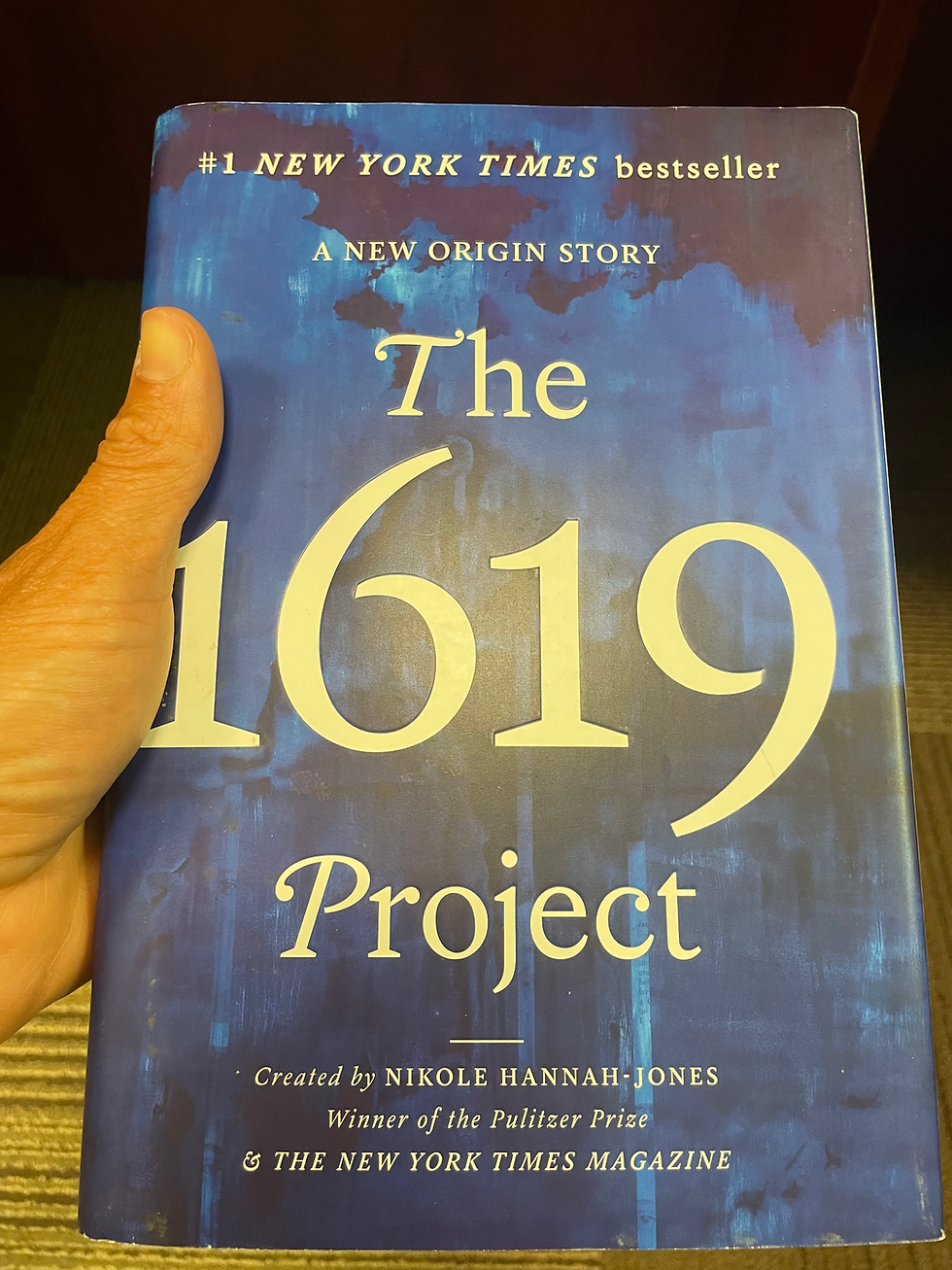
In the preface of The 1619 Project (2021), Nikole Hannah-Jones shares how she learned about Black history as a high school sophomore in an elective course. Her teacher, Mr. Ray Dial, taught her about the “ancient Mali, Songhai, Nubian, and Ghana empires” (xvii).
Outside of class, Nikole Hannah-Jones found additional books about Black history. She read the classic text Before the Mayflower by Lerone Bennet, Jr., and saw her ancestors in the story of America. Her school experiences are not unique.
Think about your formal and informal history classes.
It wasn’t until my senior year in high school, when I joined the Chicago poetry scene, that I connected more profoundly with Black history. At open mic events, I listened to poets discuss events, individuals, and organizations that extended beyond the familiar narratives of slavery, Martin, Rosa, and the NAACP. Through poetry, I also developed a more discerning ear for conscious hip-hop that uplifted the community and criticized commercial clowns.
Like writer Hannah-Jones, I studied the stories of African people prior to 1619 and their arrival in Jamestown, Virginia. New learning discoveries led me to major in Black studies in undergrad, which eventually took me to Africa. I traveled to Ethiopia and Benin on a Pan-African mission to touch the roots of humanity in African soil.
My first trip lasted one month. After developing relationships within the community, I returned and stayed for two additional three-month visits.
Are you familiar with the concept of Ubuntu? It’s an African/Zulu philosophy that emphasizes collective humanity. The concept is summarized in the statement, “I am because we are.”
It’s the idea of Ubuntu that inspired multiple trips to Africa. I wanted to make connections across the diaspora and reconnect to humanity’s birthplace.
Ubuntu informs my leadership strategies today.
This month, let’s use our histories and cultural ties to build stronger communities while also investing in self-care. If self-care means watching a game, exercising, journaling, or engaging in a protest, we must prioritize activities that refill our leadership cups.
Consider reading more about incidents and policies impacting women and share what you learn. We can’t close gender pay gaps without awareness and commitment to the process.
Subscribe to this blog to receive future posts. If you haven’t yet, contribute to this writing cause here or register for coaching at this link.


Inequalities abound, in society, in business, in government, in the world. Jesus came to set the captives free. At this point, we can focus on our own situations, what is close to us, and when we can solve or impact that, we can turn to the world. But mass exterminations must be stopped, wherever they are.